Tourism’s success depends on regional collaboration
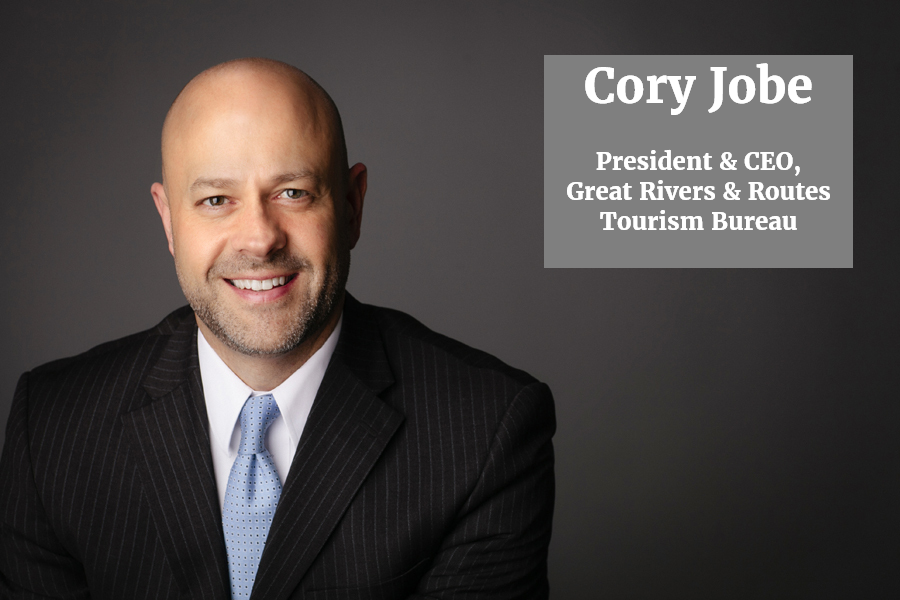 By CORY JOBE, President/CEO
Great Rivers & Routes Tourism Bureau
Tourism is often discussed as an industry measured by hotel stays, visitor spending, and attendance figures.
While those numbers matter, they tell only part of the story.
Tourism is really an ecosystem—one that thrives when communities work together to create memorable visitor experiences.
That concept is especially important in southwest Illinois, where travelers rarely visit just one community.
A visitor exploring the Great Rivers & Routes region may drive the Meeting of the Great Rivers National Scenic Byway, stop in Alton or Grafton, visit Cahokia Mounds, dine in Edwardsville, and spend the night elsewhere in the region.
To them, it’s all one destination.
The same is true along the Last 100 Miles of Route 66 in Illinois. International travelers don’t come to see a single town. They come to experience the Mother Road—from historic attractions and roadside icons to local restaurants, museums, roadside attractions, neon signs, and community events. Every stop contributes to the journey.
This interconnectedness is why tourism should never be viewed as a competition among neighboring communities. Restaurants depend on attractions. Attractions depend on lodging. Lodging depends on events. Communities depend on one another to create experiences that encourage visitors to stay longer and explore more.
 Sports tourism is another example of how regional collaboration drives economic impact. Madison County has become a premier destination for amateur and youth sporting events, attracting thousands of athletes and their families each year. While a tournament may be hosted in one facility, visitors stay in hotels throughout the county, dine in local restaurants, shop in neighboring communities, and often extend their visit to explore area attractions.
The economic benefits ripple far beyond the playing fields. Through continued investment in sports facilities, partnerships with local communities, and coordinated destination marketing efforts, Madison County has positioned itself as a regional sports tourism leader while creating opportunities for businesses across the Great Rivers & Routes region.
The greatest strength of the Great Rivers & Routes region is not any one attraction. It is the ability of communities to work together to tell a larger story—whether that’s the meeting of America’s great rivers, the final stretch of the nation’s most famous highway, or a championship sporting event that brings visitors from across the Midwest and beyond.
As destinations across the country compete for visitors, regional collaboration has become a competitive advantage. Communities that align their efforts create stronger visitor experiences, generate greater economic impact, and build more resilient local economies.
Tourism is not simply about promoting places. It is about connecting them. And in southwest Illinois, the future of tourism depends on the continued success of regional partnerships that make the whole destination stronger than any one community could be on its own.