Freight rail study highlights need for regional coordination, data-driven investment
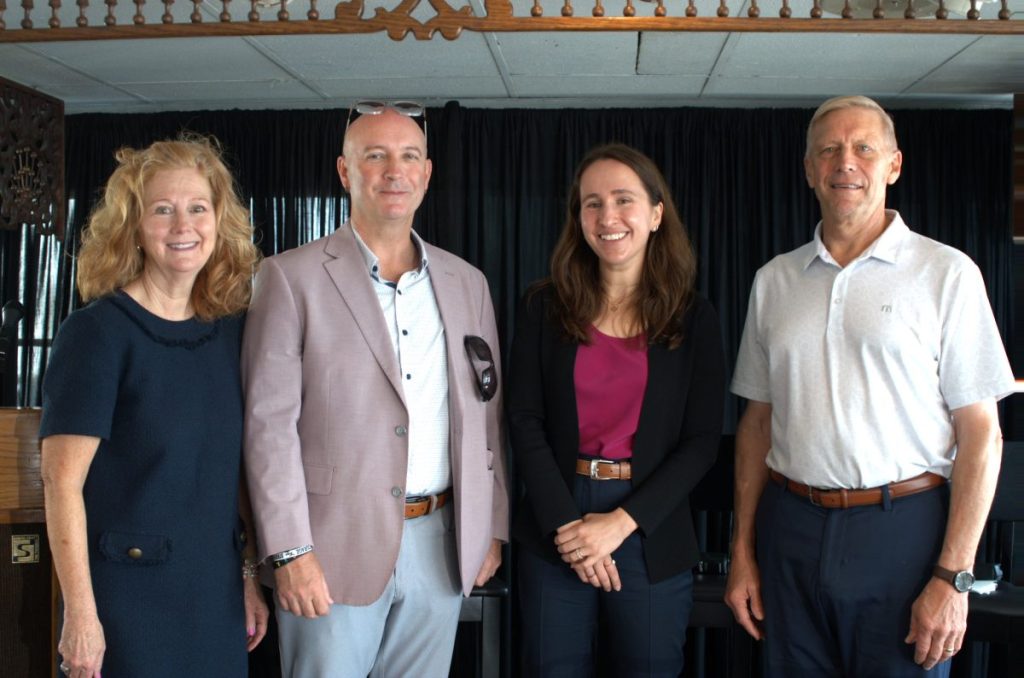
Shown from left are Mary Lamie, executive vice president of Multimodal Enterprises for Bi-State Development and head of the St. Louis Regional Freightway; Sabin Reynolds, vice president – Logistics at Watco; Katie Kirk, principal with Cambridge Systematics Inc.; and Brent Wood, president of the Terminal Railroad Association of St. Louis (TRRA).
FreightWeekSTL panel underscores importance of collaboration, multimodal integration and long-term planning for rail network efficiency to strengthen St. Louis Region’s position as a global logistics hub
Leaders from across the freight rail, logistics and planning sectors convened during FreightWeekSTL to discuss early insights from an ongoing Freight Rail Efficiency Study and what it means for the St. Louis region’s future as a multimodal freight hub.
Moderated by Mary Lamie, executive vice president of Multimodal Enterprises for Bi-State Development and head of the St. Louis Regional Freightway, the panel featured Brent Wood, president of the Terminal Railroad Association of St. Louis (TRRA); Katie Kirk, principal with Cambridge Systematics Inc., which is conducting the study; and Sabin Reynolds, vice president – Logistics at Watco.
Lamie, whose organization commissioned the study, opened the session. She framed the study as a collaborative, data-driven effort to better understand the region’s freight rail system and identify opportunities to improve performance, reliability and long-term competitiveness.
“Today’s discussion will provide insights from an ongoing freight rail efficiency study we commissioned for southwestern Illinois,” Lamie said. “We’ll explore how technical analysis of rail network conditions, performance, safety, and commodity flows are paired with the on-the-ground input to build a shared regional understanding of challenges and opportunities.”
Panelists emphasized that the St. Louis region’s strength lies in its unique connectivity and central role in the national freight system. Wood highlighted the tremendous collaboration that exists in the St. Louis region, particularly as relates to identifying freight infrastructure priorities and advocating for funding for them, and he discussed the critical role TRRA plays in linking the region’s rail network to major carriers across the country.
“Terminal Railroad is kind of the glue that holds the rail network together in St. Louis,” Wood said. “We connect with all six Class I railroads. We have a route to just about anywhere in the nation.” He also pointed to the scale of infrastructure that supports that connectivity, including a large hump yard, multiple Mississippi River crossings and a coordinated dispatch system that works daily with all Class I railroads.
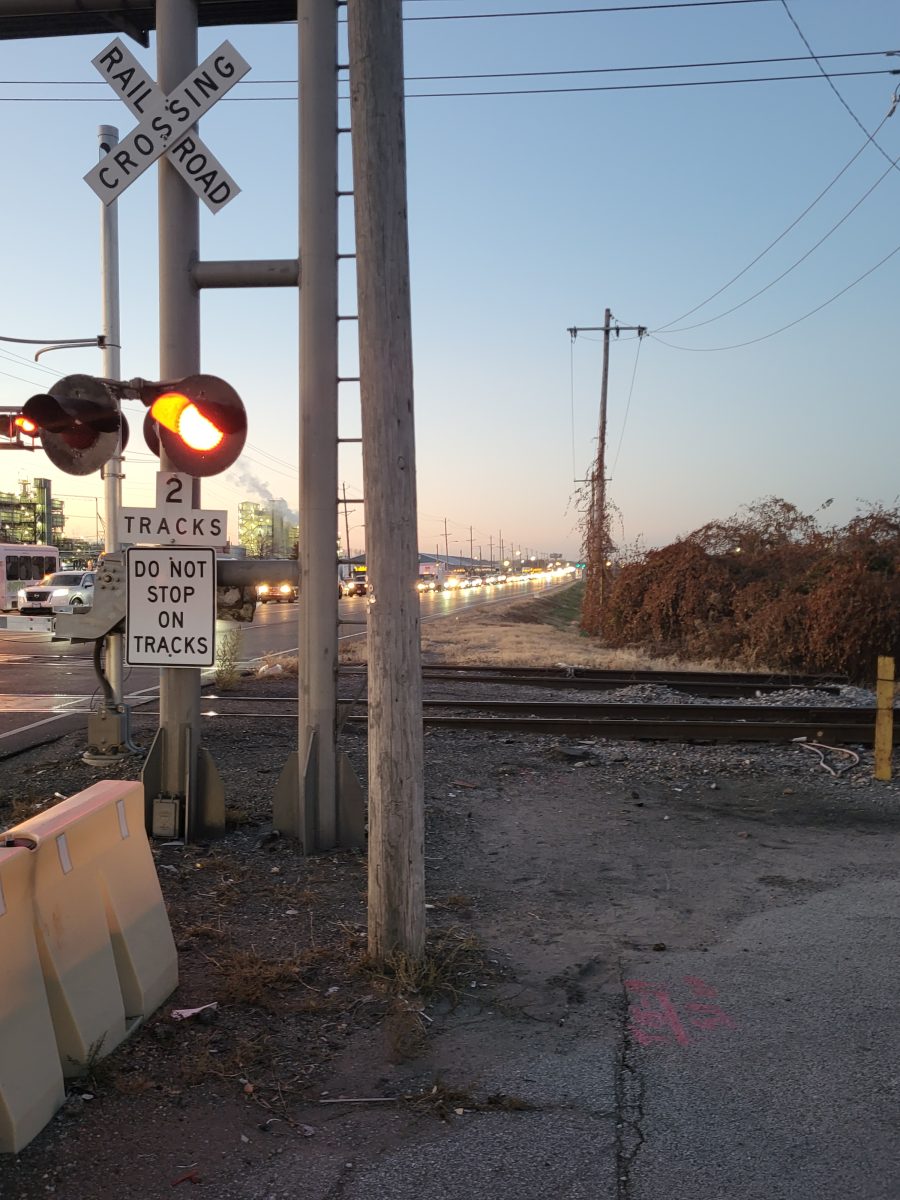
A view of a busy at-grade rail crossing in the STL region.
From a user perspective, Reynolds underscored how connectivity supports real-world freight movement across multiple modes. “We’re both a participant in and a user of the St. Louis gateway region and the rail and transportation network,” Reynolds said, noting Watco’s extensive terminal presence and logistics operations across North America. He added that Watco works closely with rail partners, short lines and agencies to help move the freight in all the different parts of the system.
“The stronger the rail network, the more nimble and flexible the region and the gateway becomes to attract end users, to attract manufacturing, to attract people,” Reynolds said. “So that’s a key consideration as you flex up the rail study and the rail infrastructure investment, keeping your head on a swivel and remembering the impact to the crossings, to the roadways, the waterways, the overall access. That ease of access is key to us growing our business as a gateway region and to our end shippers.”
Kirk described the Freight Rail Efficiency Study as a rigorous, multi-layered effort combining technical analysis with extensive stakeholder engagement across jurisdictions and sectors, including an advisory committee, interviews and a public survey. She noted that the St. Louis rail network’s complexity—driven by its highly interconnected, multimodal nature—has created challenges around capacity, coordination and conflict points at various crossings, requiring both the detailed analysis and stakeholder input to fully understand where the system is underperforming and why.
“At this point we’re really trying to be as nimble as we can, control what we can but, regardless, identify projects that set the region up for success no matter what the market conditions are,” Kirk said.
She emphasized that the study reflects more than a year of coordinated work with regional partners and is reaching a critical stage. She added the study is deliberately identifying both near-term “quick wins” and longer-term capital projects to improve system performance.
Kirk said quick wins are defined as relatively low-cost improvements that can be implemented quickly but deliver measurable impact, such as converting manual switches and adding cameras to improve coordination, helping build momentum and stakeholder buy-in. At the same time, the study is evaluating larger, more complex infrastructure needs, including major junction upgrades and capacity enhancements, that will require longer timelines but are critical to addressing persistent bottlenecks and positioning the region for sustained growth.
A central theme of the discussion was the importance of shifting from isolated fixes to a more holistic, systemwide strategy for improving rail performance across the region. Panelists noted that while individual projects, such as bridge and yard improvements, are essential, long-term success depends on aligning investments with broader network needs and ensuring coordination among railroads, shippers, public agencies and economic development partners.
The study also incorporates the community benefits of a more efficient rail system. Investments that reduce congestion and improve coordination can enhance safety, support industrial development and improve quality of life in surrounding communities, particularly in areas affected by at-grade crossings and freight traffic delays. The study is designed to keep those factors in mind while helping to move the region forward by identifying priority investments, improving transparency around network performance and supporting more strategic decision-making.
For private sector partners like Watco, that coordination has direct operational and financial implications, affecting everything from workforce planning to customer service and delivery timelines. At the same time, panelists emphasized that improving rail efficiency has broader economic ripple effects, supporting industrial growth, enhancing supply chain resilience and strengthening the region’s value proposition for global logistics investment.
Throughout the discussion, speakers reinforced that the St. Louis region’s competitive advantage lies in its multimodal connectivity where rail, barge and trucking networks intersect, and that continued coordination will be key to maintaining and enhancing that position. The Freight Rail Efficiency Study is expected to provide a roadmap for advancing that coordination, helping stakeholders better align priorities and investments across the system.
Closing the session, Lamie reiterated the importance of collaboration and the value of the study in building a unified regional strategy. “I hope our audience appreciated the deeper dive into this study and how this truly collaborative process created a common framework to align regional priorities and position the region for the coordinated freight rail planning that is so critical,” she said. “We look forward to sharing the comprehensive findings this fall.”
FreightWeekSTL 2026 was held June 8 – June 12 and featured a series of panels, interviews and tours exploring the infrastructure, innovation and workforce development initiatives shaping the future of freight movement. To learn more or view any of the session recordings, visit FreightWeekSTL.com.
Photos provided by St. Louis Regional Freightway.

About St. Louis Regional Freightway
Established as the St. Louis region’s authority for coordinating support for industrial businesses and the logistics infrastructure they depend on, the St. Louis Regional Freightway (the Freightway) provides site selection and business assistance to manufacturing, logistics and multimodal transportation companies and their service providers. As an enterprise of Bi-State Development, the Freightway partners with public sector and private industry businesses to advocate for infrastructure development that supports the movement of freight, leads initiatives to grow the region’s talent pool, and plays a critical role in marketing the region as a world-class manufacturing and distribution cluster within the City of St. Louis and seven adjacent counties in Missouri and Illinois. To learn more, visit TheFreightway.com.