
[Op-Ed] U.S. Senate candidate sounds alarm about health insurance increases for Illinoisans
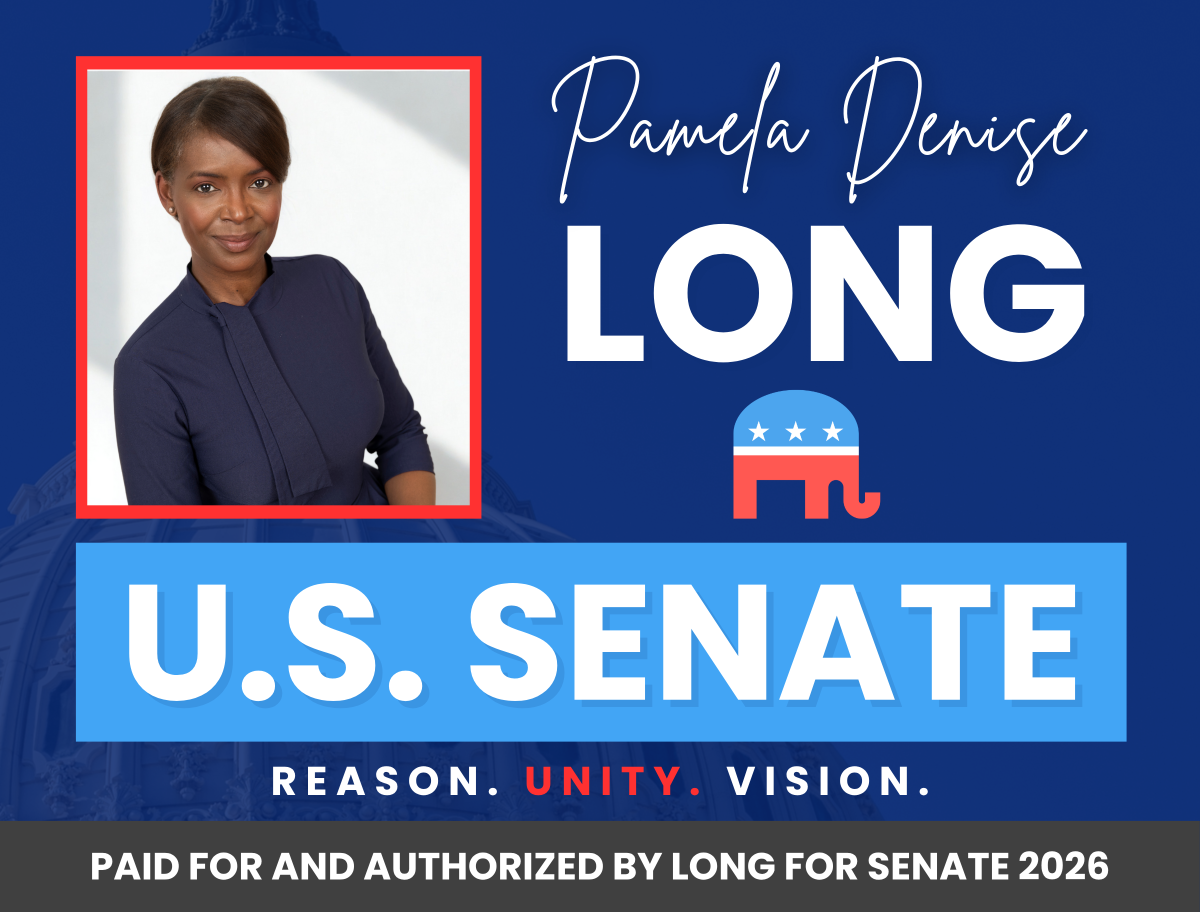 U.S. Senate Candidate Dr. Pamela Denise Long submitted the following commentary recently, in her words, “to sound the alarm about a maximum 62 percent to 75 percent increase in health insurance costs for Illinoisans as elected officials fail to act before open enrollment.”
Dr. Long further noted that one of her first legislative priorities will be choice, portability, increased competition, and affordability of health insurance.
“While the bipartisan Affordable Care Act (ACA; also called “Obamacare”) prevents discrimination based on preexisting conditions, Americans are still burdened by debt from health care services and we remain a sick population which heightens the risks for insurers, thus raising costs of insurance. For Illinoisans, upcoming insurance costs are being addressed at the state and federal levels. For Plan Year 2026, Illinois is transitioning from healthcare.gov to a state-based marketplace for ACA plans (GetCovered.Illinois.gov).
“According to the Illinois Department of Insurance (DOI), premium rate increases filed by ACA insurers in the state are proposed to rise by about 18 percent on average. Rate increases proposed by Blue Cross Blue Shield (BCBS) of Illinois, our state’s largest health insurer, amount to an increase of 27 percent, on average, across its plans that serve 8.8 million Illinoisans. The maximum proposed rate increase is 62.2 percent for a BCBS of Illinois individual plan. Federally, costs will spike in participating ACA plans because enhanced subsidies from the American Rescue Plan and Inflation Reduction Act will be sunset to zero for those making over 400 percent of the federal poverty level ($62,600 per year for an individual / $84,600 per year for a couple), a potential spike of 75 percent for Americans at that income level. Rates could double in some locations.
“If the subsidies expire, the cost of a bronze plan for a 45-year-old, single person/no child in Springfield Illinois earning $62,600 would change from $288 per month to $579 per month. Open enrollment starts on Nov. 1, 2025; Congress should have acted before Fall 2025 to address the proposed rise in costs of health insurance premiums in the ACA Marketplace. And while Democrat law makers in Congress are now demanding an extension of federal ACA subsides, a simple rubber stamp extension is still possible (but unlikely) from our reform-minded Republican legislature before the absolute deadline of Dec. 31, 2025,” said Long further.
 Long, a doctor of organizational leadership (specializing in organizational development), has over two decades of experience as an occupational therapist delivering care across the lifespan in health settings, including to pre-mature infants, youth, working aged adults, and elders. She joined the Republican Party in 2008.
When chosen to serve as the Missouri State Co-Chair for Women Impacting Public Policy (WIPP)—a national nonpartisan organization advocating on behalf of women entrepreneurs—Dr. Long advocated with policy makers for health care quality and affordability including championing the passage of the Children’s Health Insurance Program Reauthorization Act (CHIPRA) of 2009 to improve healthcare access for low-income young Americans.
During his first term, President Donald Trump extended the Children’s Health Insurance Program (CHIP) for an additional ten years. That extension will expire in 2027, when Dr. Long would take office. President Trump also expanded access to short-term, limited-duration insurance plans (STLD) up to 12 months, with renewable coverage for up to three years. Effective Jan. 1, 2025, STLD plans cannot be sold nor renewed in Illinois.
Long further stated, “Access to affordable, quality care is literally a matter of life-or-death. For about 80 years, we’ve made it easiest to get affordable, pre-tax, quality health insurance through a job. Illinois business owners and families have personally shared with me the rate increases they will face over the next year. The owner of a small business in central Illinois reported a 40 percent increase in costs for her employees’ coverage and an elderly couple downstate reported an increase in long-term care insurance premiums from $800 to $2,400. That’s simply not sustainable. I will continue to fight for Americans of all ages and ability levels to receive quality healthcare in a way that increases choice, secures personal ownership of insurance policies, facilitates investment in wellness, moves toward pay-for-performance, and doesn’t bankrupt households nor our federal budget. The One Big, Beautiful Bill (OBBB) didn’t address rising health care costs related to the expiration of subsidies. I will work with the President, Congressional colleagues, and trusted advisors to make provider competition and affordability a reality for American families.”
According to Long, data shows that robust competition among insurance providers lowers costs for consumers. Long also supports the reinstatement of quality short-term, limited-duration insurance plans for those who want them, expansion of tax-free health-savings accounts (HSAs) for all Americans, and medical savings accounts (MSAs) for older adults. HSAs/MSAs are owned by the person, are inheritable, and the money can be converted into retirement funds if not utilized. According to the Federal Reserve, Americans on the cusp of retirement, at ages 45-54, have an average retirement savings of approximately $313,220. Inflation and high costs of living hurts families by decreasing affordability of everything from groceries, transportation, and utilities, to healthcare management, and, of course, retirement planning. Sixty-two percent of Americans support the ACA; a well-designed expansion of plan options and an increased emphasis on portable insurance could offset out-of-pocket costs, support small businesses, and supplement quality of life during retirement.
Visit www.longforsenate2026.com/issues for more information about Dr. Long and the campaign.


