John Simmons, Mike Pinto pen new book: ‘Always a Miner’
Duo’s book captures lightning-in-a-bottle magic, chronicling when entire community – 17,000 residents — adopts sports team, turning baseball players into folk heroes
The opening night numbers seemed impossible: 6,251 fans in a town of 17,000 people. Nearly 40 percent of Marion, Ill., had shown up to watch professional baseball return to their community for the first time since 1950.
 But that was just the beginning of something magical.
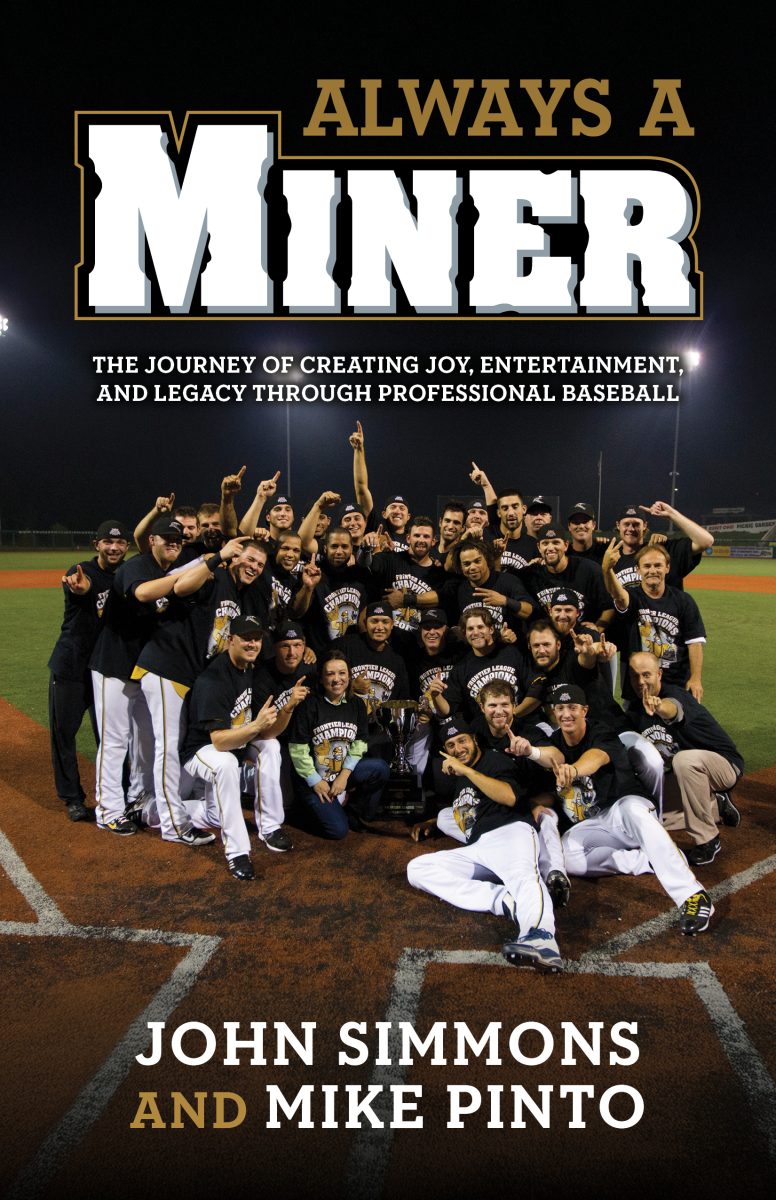
“Always a Miner,” a new book by John Simmons and Mike Pinto, chronicles how the Southern Illinois Miners became more than a baseball team – they became the heartbeat of a community that transformed young athletes from around the world into local folk heroes.
“When they opened the doors and you saw the amount of people there, you’re like, ‘Holy s*^t! This is awesome,'” recalled player Ralph Santana about that first night. “It was a sight to see. It was incredible.”
The magic wasn’t confined to opening night. The Miners averaged over 5,086 fans per game in their inaugural season, which is remarkable attendance for any level of professional baseball, unprecedented for a town of Marion’s size.
Community Transformation: Players became instant celebrities in ways that surprised even veteran minor leaguers. “They were like big leaguers in Marion,” said Erik Haag, the team’s first CEO. “We would do public appearances, and we’d be mobbed. If we brought players to events at the local Kroger, they’d be swamped for the entire hour they were there.”
Tim Dorn, a towering first baseman whose mammoth home runs became local legend, described the culture shock: “I had never played for a home team that drew so well. It was an amazing experience. That was my big leagues. They gave us bobbleheads, for Christ’s sake. That’s a big-league experience.”
Unprecedented Fan Connection: The relationship between players and fans transcended typical sports fandom. Players had difficulty spending money at local restaurants and bars because Miners fans insisted on picking up their tabs. Autograph sessions after games regularly lasted until 1 AM because players genuinely enjoyed interacting with their supporters.
Mike Scanzano, a shortstop in the early years, captured the unique atmosphere: “The buzz of the players taking ground balls, talking about how last night went was absolutely insane. It was just historic. It was something to be proud of. You don’t get that opportunity often as a baseball player to open up a stadium like that, to have the representation of the town so strong, to love and care about you.”
Regional Phenomenon: The Miners’ appeal extended throughout Southern Illinois, drawing fans from a 100-mile radius. Season ticket holders drove hours for every home game, creating a regional identity around the team that transcended municipal boundaries.
Economic Impact: The community support translated into tangible economic benefits. Local businesses flourished on game nights, hotels filled with visiting fans, and the team became the region’s primary entertainment attraction, competing with venues in much larger markets.
Cultural Integration: Players weren’t just athletes passing through – they became part of the community fabric. They participated in charity events, visited schools, and formed lasting relationships with local families. Many settled permanently in Southern Illinois, starting businesses and raising families.
The “Folk Hero” Effect: Certain players achieved legendary status that endures today. Joey Metropoulos, who hit 31 home runs in 2009, had a bobblehead created in his honor. Fans still discuss Tim Dorn’s tape-measure home run that cleared the 20-foot batter’s eye in dead center field – a blast witnessed by perhaps 3,500 people but claimed by 50,000.
Community Pride: Glenn Poshard, former U.S. Representative who helped bring the team to Marion, explained the deeper impact: “People in this area were not used to things like this. The town was absolutely thrilled by it. The region was thrilled by it. They claimed that team immediately.”
The magic created a feedback loop: community support inspired players to extraordinary efforts, which deepened fan loyalty, which attracted better players, which created more memorable moments. For fifteen years, this cycle created something that seemed impossible in modern sports – genuine connection between professional athletes and their community.
“You felt like these were your people. This was your home,” Santana concluded. “This had more a hometown feel to it. You felt like these people were your family.”
About the Book:
“Always a Miner: The Journey of Creating Joy, Entertainment, and Legacy Through Professional Baseball” is available on Amazon, capturing the complete story of how small-town magic can still happen when community and sport align perfectly.
Website: https://alwaysaminer.com
Facebook: https://www.facebook.com/profile.php?id=61577205582064
Instagram: https://www.instagram.com/alwaysaminerbook/
Twitter: https://x.com/AlwaysaMiner