
Habitat incentive programs aid landowners, wildlife
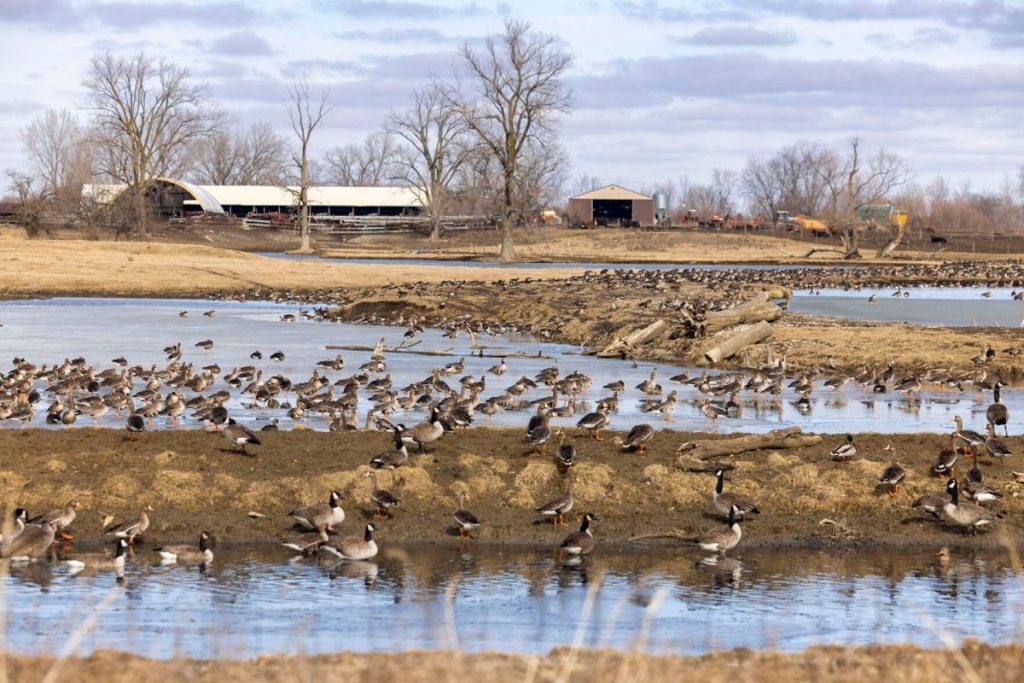
Dozens of waterfowl gather in rural Fulton County. Landowners in Illinois have several options to help establish pollinator or wildlife habitats that benefit upland birds, grassland birds and boost farmer profitability. (Photo by Catrina Rawson of FarmWeek)
By HANNAH SPANGLER
FarmWeek
The Pheasants Forever and Quail Forever organizations are assisting landowners in establishing pollinator or wildlife habitats that benefit upland birds, grassland birds and farmer profitability.
“When I meet with a landowner, the first thing I want to do is understand their goals, what resources they have and if they have cropland,” said Caleb Worley, a farm bill biologist with Pheasants Forever and Quail Forever, during a wildlife habitat educational program Feb. 6 in Bureau County.
Recognizing that different practices work for different people, Worley helps landowners select the edge-of-field or whole-field practice that best meets their needs. He also assists in navigating the Conservation Reserve Program (CRP) and Environmental Quality Incentives Program (EQIP), which offer services like cost shares, incentive payments and signing bonuses.
During the program, part of the University of Illinois Extension’s Sustainability on the Farm series, Worley told FarmWeek that he recommends CRP for those with cropland. Administered by the Farm Service Agency (FSA), CRPs provide rental payments and financial assistance for establishing cover crops or habitats.
Most edge-of-field practices fall under Continuous CRP, including those classified by FSA as CP43 prairie strips, CP33 habitat buffers for upland birds and CP21 filter strips. These practices can improve water quality, reduce erosion and create wildlife habitats.
“We had a producer implement 10.1 acres of CP33 habitat buffers along their timber. This increased their yield by 13 bushels per acre,” Worley said. “This was on corn which increased their profitability by $13.44 per acre overall, increasing the return on their investment by 10.6%. So, it is a way for you to increase profitability on your farm and you’re getting some pretty good habitat.”
Worley noted that most General CRPs are whole-field practices, such as establishing pollinator habitats. While the maximum payment is slightly lower than in Continuous CRP, capping at $240 per acre, General CRPs have no acreage minimum, making them suitable for landowners not wanting to enroll many acres.
For those without cropland, Worley recommends EQIP, which can be used for forested or grassland acres. This program helps improve wildlife habitats through brush management and herbaceous weed control, and it can also be used for cover crops and building fencing for cattle. Although EQIP does not offer yearly rental payments, it provides financial assistance. Applications for EQIP are open until Feb. 28.
Farmers and landowners looking for the right program can contact Worley at [email protected], their nearest FSA office or their county’s Pheasants Forever biologist.
U of I Extension Educator Emily Hansen encouraged those interested in sustainability to attend other sessions in the Sustainability on the Farm series. Upcoming programs include Conservation Tillage on Feb. 20, Edge-of-Field Practices on March 6 and Cost Share Programs on March 20. More details can be found at registration.extension.illinois.edu/start/sustainability-on-the-farm.
“The series provides beginner information for people who are conservation-minded but haven’t gotten started yet,” Hansen said. “It’s important for all of us at Extension, especially on the commercial ag team, to advance sustainability where we can.”
This story was distributed through a cooperative project between Illinois Farm Bureau and the Illinois Press Association. For more food and farming news, visit FarmWeekNow.com.





To whom It May Concern,
I am looking into getting an incubator and raising some bird’s next spring. Quail, Pheasants, and Turkeys. I was curious if you could supply me with any information where I could get some help w/ expenses or any other help. Email is attached. Please let me know. Thank you.
Hello. I removed your phone number from your message for your own privacy. Hopefully someone will post a reply to you here, or email you as you had also requested. Good luck! — IBJ Managing Editor
You might also reach out as the story indicates: “Farmers and landowners looking for the right program can contact Worley at [email protected], their nearest FSA office or their county’s Pheasants Forever biologist.”