
Illinois: A powerhouse for innovation and America’s digital future
By HARVEY HENSON
Southern Illinois University
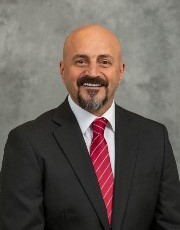
Harvey Henson
Illinois has long been a hub for innovation. Our strategic location in the heart of the Midwest amidst a robust network of top-tier universities, and a rich legacy of collaboration among private, public, and academic sectors are just a few reasons innovation continues to thrive here.
Since 2014, the STEM Education Research Center at Southern Illinois University Carbondale has played a vital role in this innovation ecosystem — building, sustaining, and advancing science, technology, engineering, and math (STEM) education across local, regional, and national levels. At the heart of our mission is preparing the next generation of STEM educators and professionals and promoting STEM literacy through research, education, and service.
We believe Illinois is a powerful engine for American leadership in innovation. But that leadership can no longer be taken for granted.
A recent report from the Lexington Institute warns that America’s technological edge is facing serious threats from global competitors — chief among them, China. The Chinese government has made its ambitions clear: to lead the digital economy. To that end, China has already invested more than $2.8 trillion in strategic technologies like artificial intelligence, while also engaging in aggressive efforts to steal American intellectual property and trade secrets.
Perhaps most alarming is China’s projected advantage in workforce development. Over the next decade, it is expected to outproduce the U.S. by 27.5 million STEM graduates. Meanwhile, unfilled STEM positions in the U.S. continue to rise, creating critical gaps in our high-tech workforce.
This moment demands serious reflection. Are we prepared to cede leadership in digital innovation to an authoritarian regime — one that promotes AI tools rooted in censorship and revisionist history? The answer must be no. We envision a digital future built on democratic values, grounded in facts, and supported by an open and accessible internet — where freedom of expression is a cornerstone, not a casualty.
Securing America’s tech leadership starts here in Illinois.
Our state has already made significant strides. We’re leading in emerging technologies like quantum computing, electric vehicle manufacturing, and agricultural innovation. Illinois has been recognized as a national tech hub, attracting millions in federal grants and spurring continued investment from the private sector.
But we can’t let up. What’s needed now is bold and sustained commitment from policymakers at every level — local, state, and federal — to strengthen and expand America’s innovation ecosystem.
We must accelerate investments in critical technologies such as artificial intelligence, advanced computing, and quantum science. At the same time, we must resist the urge to overregulate. While it’s important to address risks, excessive regulation can stifle the very innovation we’re trying to foster — particularly for startups and entrepreneurs, many of whom call Illinois home. A thoughtful, measured approach to policy will ensure innovation continues to thrive here.
Equally vital is a renewed national focus on STEM education. Technology is reshaping every sector of our economy, and we must prepare students — beginning in early childhood and continuing through higher education — to be fluent in the language of the digital age. Every student deserves access to high-quality STEM learning opportunities so they can help build and lead our future.
In recent years, STEM has evolved into STEAM — adding Art to acknowledge the creativity and design thinking essential to innovation. I like to think the “A” also stands for All of Us. Because this future belongs to all of us. Building it will take all of us. And protecting it demands strong leadership and smart policy that empowers all of us.
Harvey Henson is director of STEM Education Research Center at Southern Illinois University.




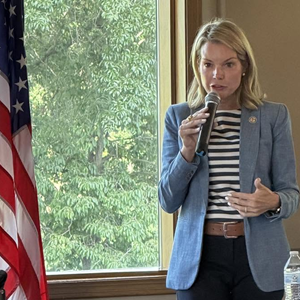
Dr. Henson has sounded an alarm with this thought provoking analysis of our current and future prospects in Science, Technology, Engineering and Math (STEM). We must (as a nation) put more emphasis on these disciplines in our core education and must continue to provide our educators with the latest research to provide for a curriculum that emphasizes this urgency.
The SIU STEM Education Research Center continues to strive to reach these goals everyday as do other STEM centers in Illinois. Let’s all recognize their efforts with our support.
Dr. Henson’s piece is roadmap for the future of STEM literacy throughout the state and beyond. STEM education being key to that future. Having worked with Dr. Henson, I know first-hand that his tireless leadership is helping to move the SIUC program toward the goals he’s outlined. But expanding funding for the program in our region thru public and private partnership has never been more critical. We all owe a debt of gratitude to Dr. Henson for his leadership and for vision of the future he is providing.